Please note: we are closed on Thursday, Oct 29 for our annual Gala celebration. Plan your visit …
Please note: we are closed on Thursday, Oct 29 for our annual Gala celebration. Plan your visit …
Please note: we are closed on Thursday, Oct 29 for our annual Gala celebration. Plan your visit …
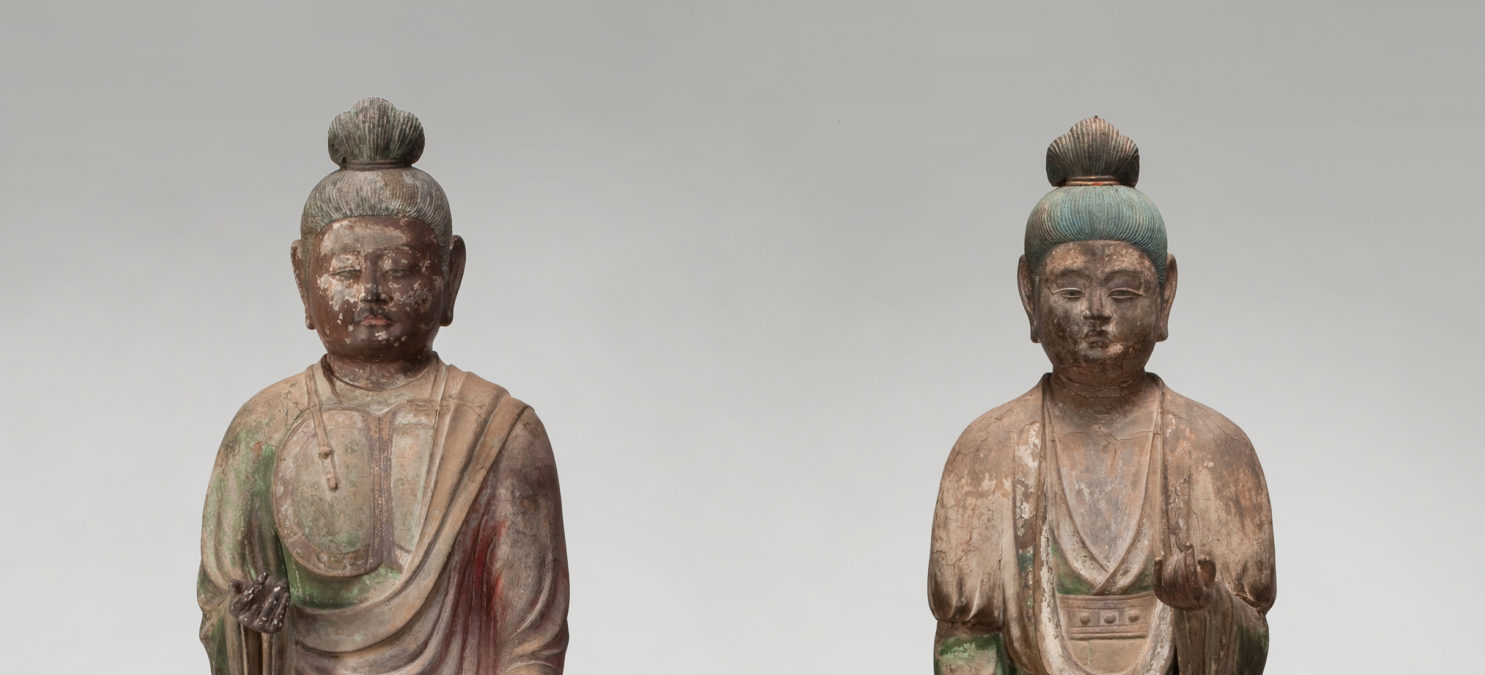
Made more than 1,200 years ago, these guardian deities from a Japanese Buddhist temple are rare surviving examples of the ancient hollow dry-lacquer technique.
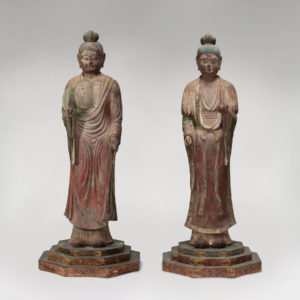
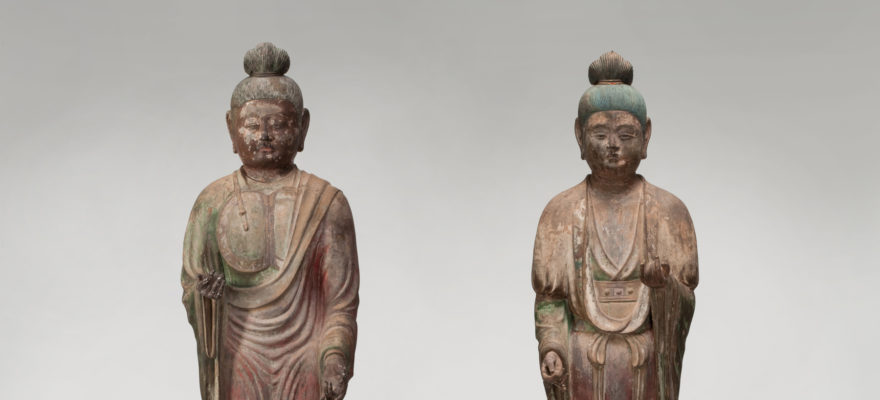
The deities Brahma and Indra (Bonten and Taishakuten)
approx. 730–750
Japan; Nara
Nara period (710–794)
Hollow dry lacquer
The Avery Brundage Collection, B65S13 and B65S12
Large-scale, hollow dry-lacquer statues like these are rare even in Japan, where most are designated as National Treasures or Important Cultural Properties. Brahma and Indra, known in Japan as Bonten and Taishakuten, were considered protective figures, and statues of the two deities were typically paired as attendants flanking a buddha or bodhisattva. This pair once belonged to the prominent Buddhist temple Kofukuji in Nara, Japan. Made in the eighth century, these statues are among the few surviving Brahma and Indra images from that period.
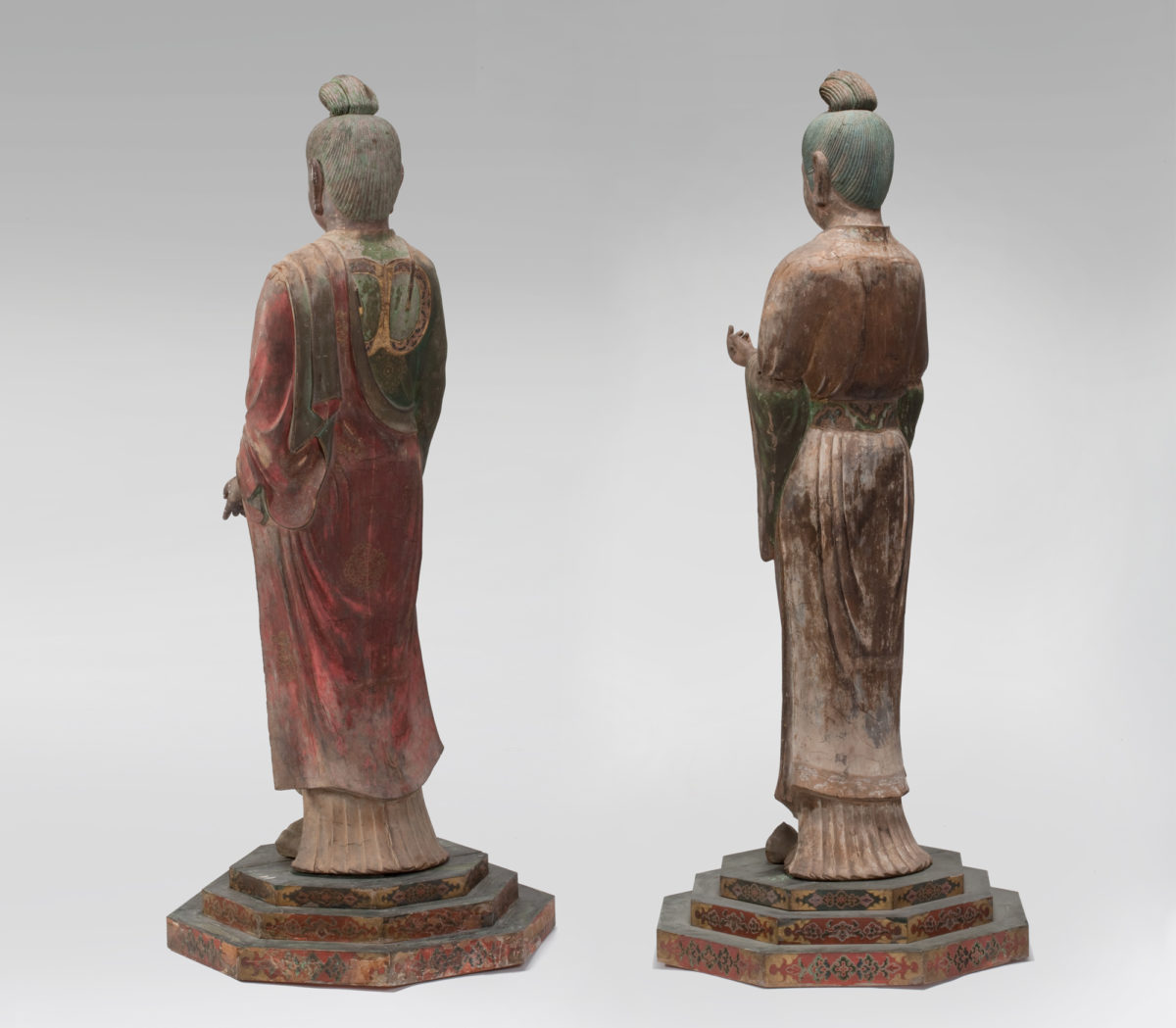
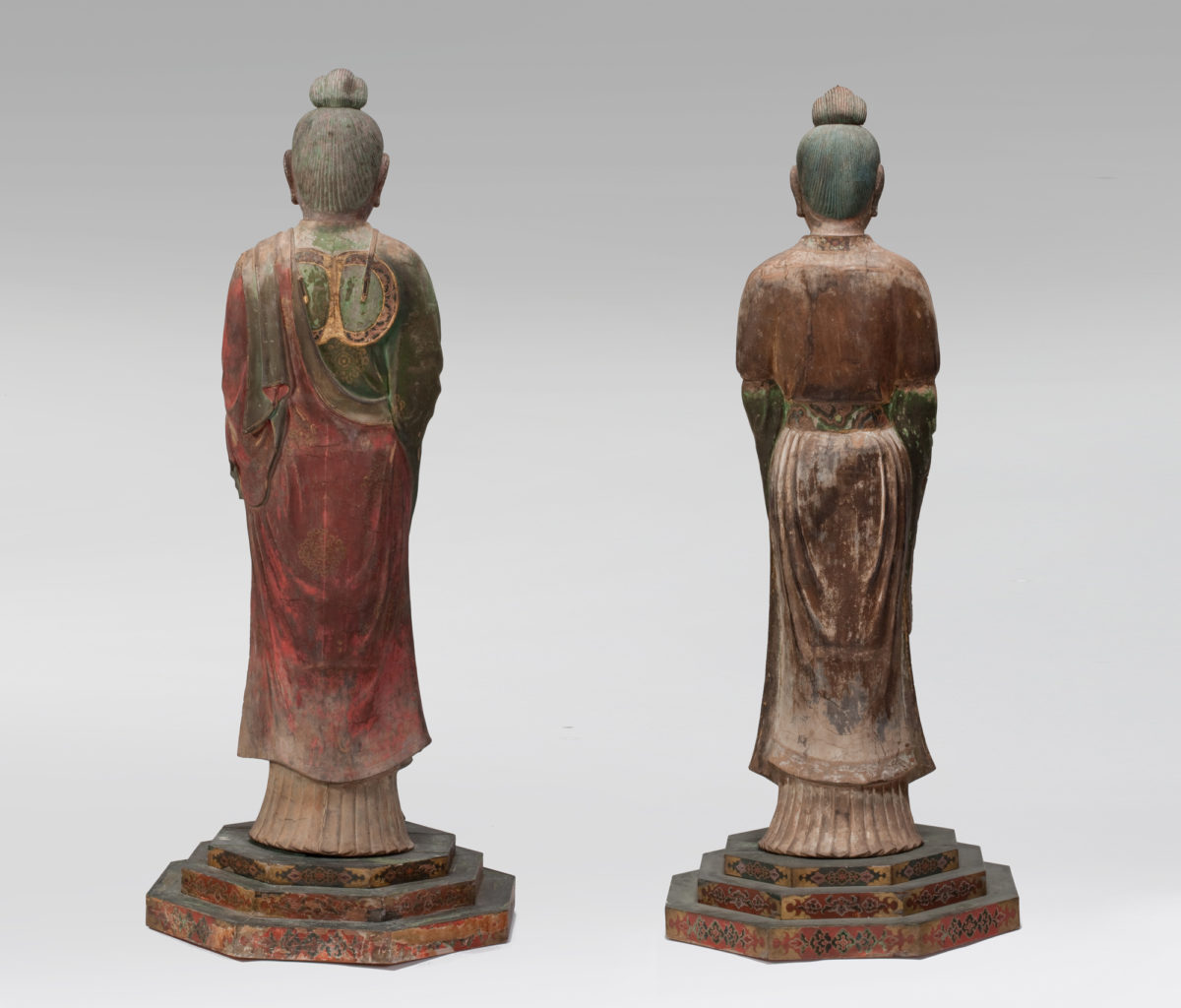
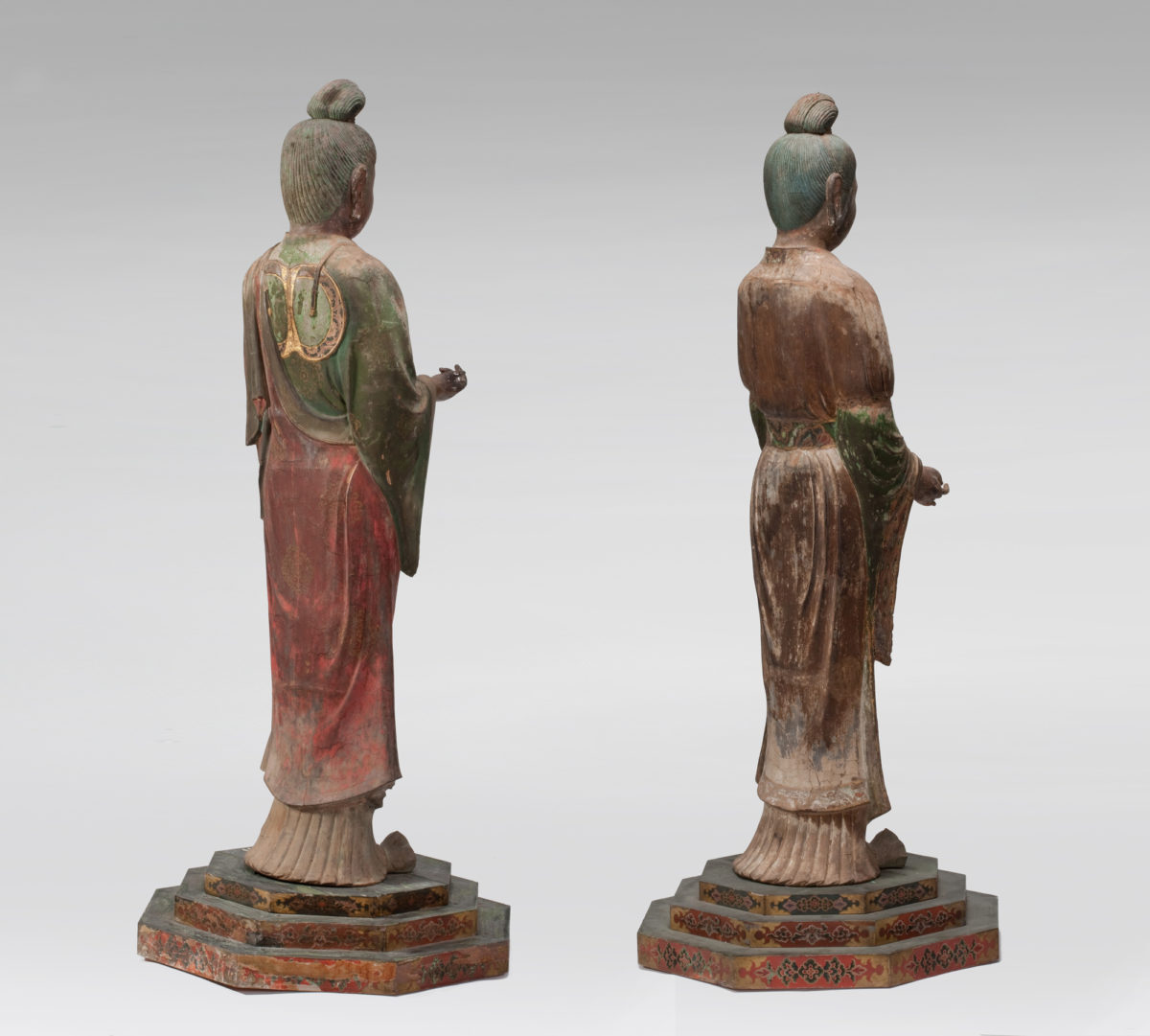
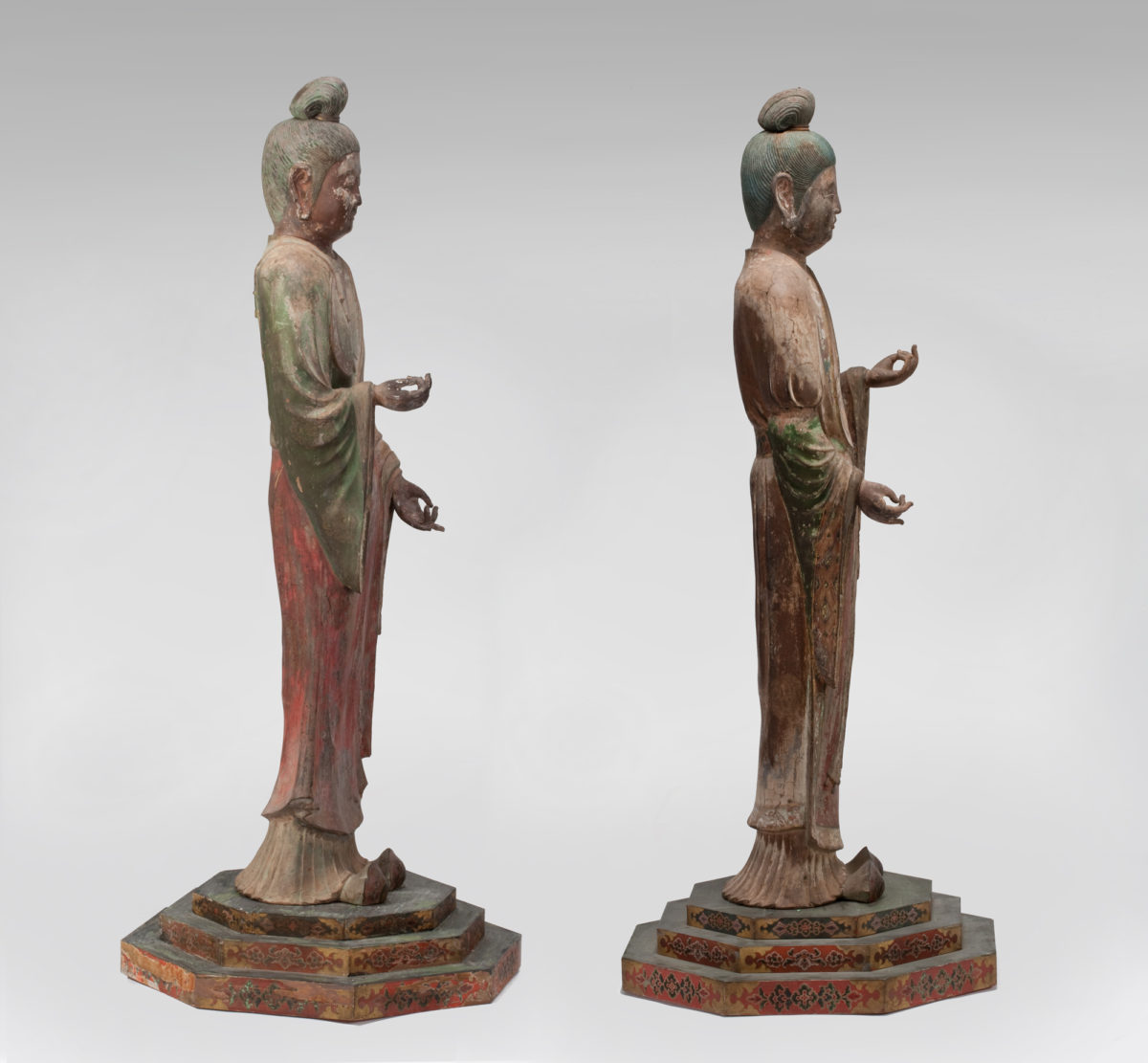
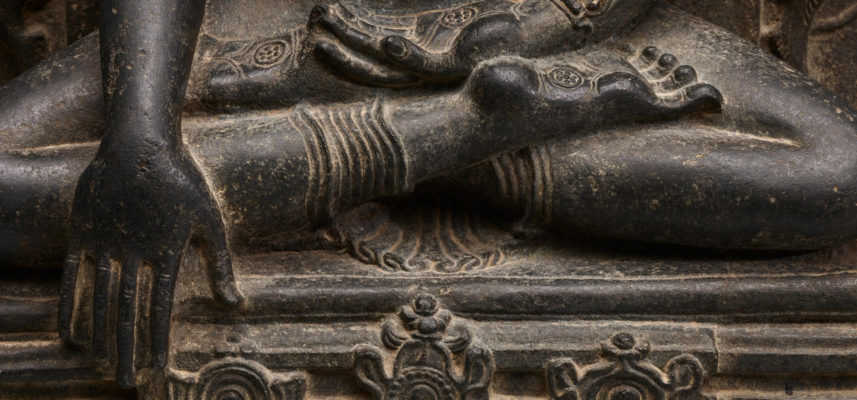
Brahma and Indra are Hindu deities who had been incorporated into Buddhism by the first century BCE. In Nara-period Japan (710–794), Brahma and Indra were considered protective figures, part of the class of deities known as devas. Statues of the two deities were typically paired as attendants flanking a buddha or bodhisattva (see this early example from India). The Asian Art Museum’s Brahma and Indra are among the earliest Japanese images of these deities to have survived to the present day.
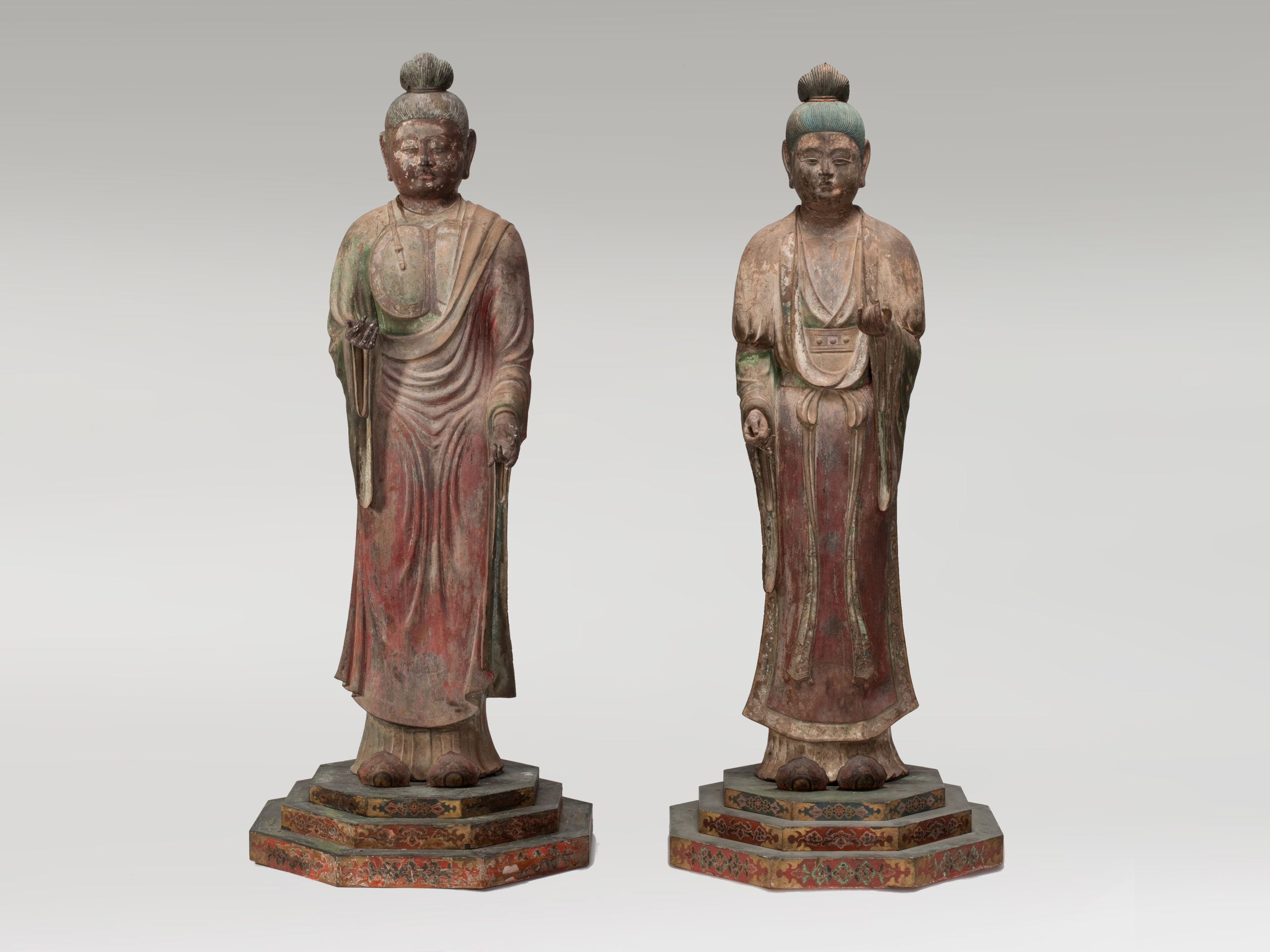
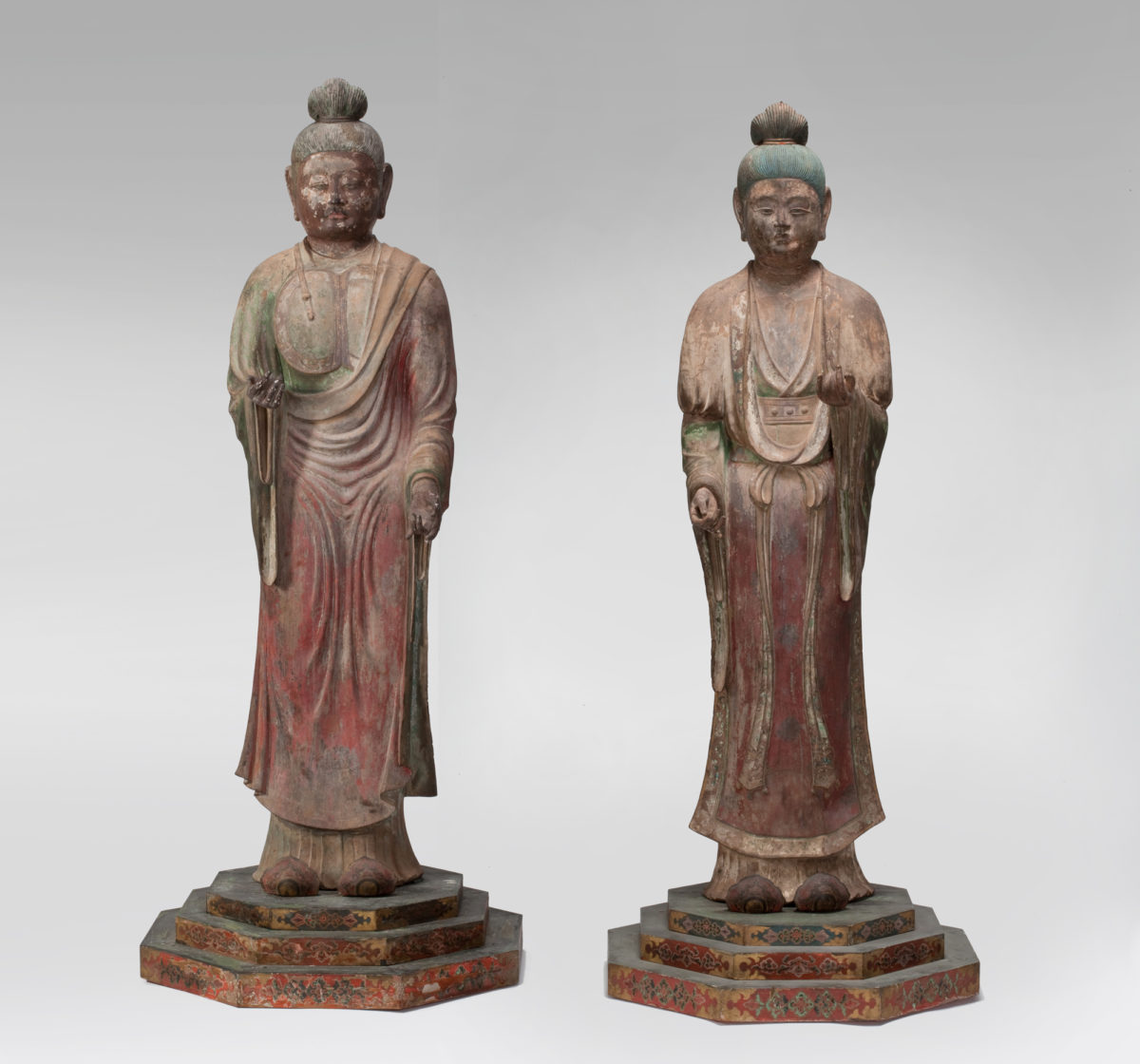
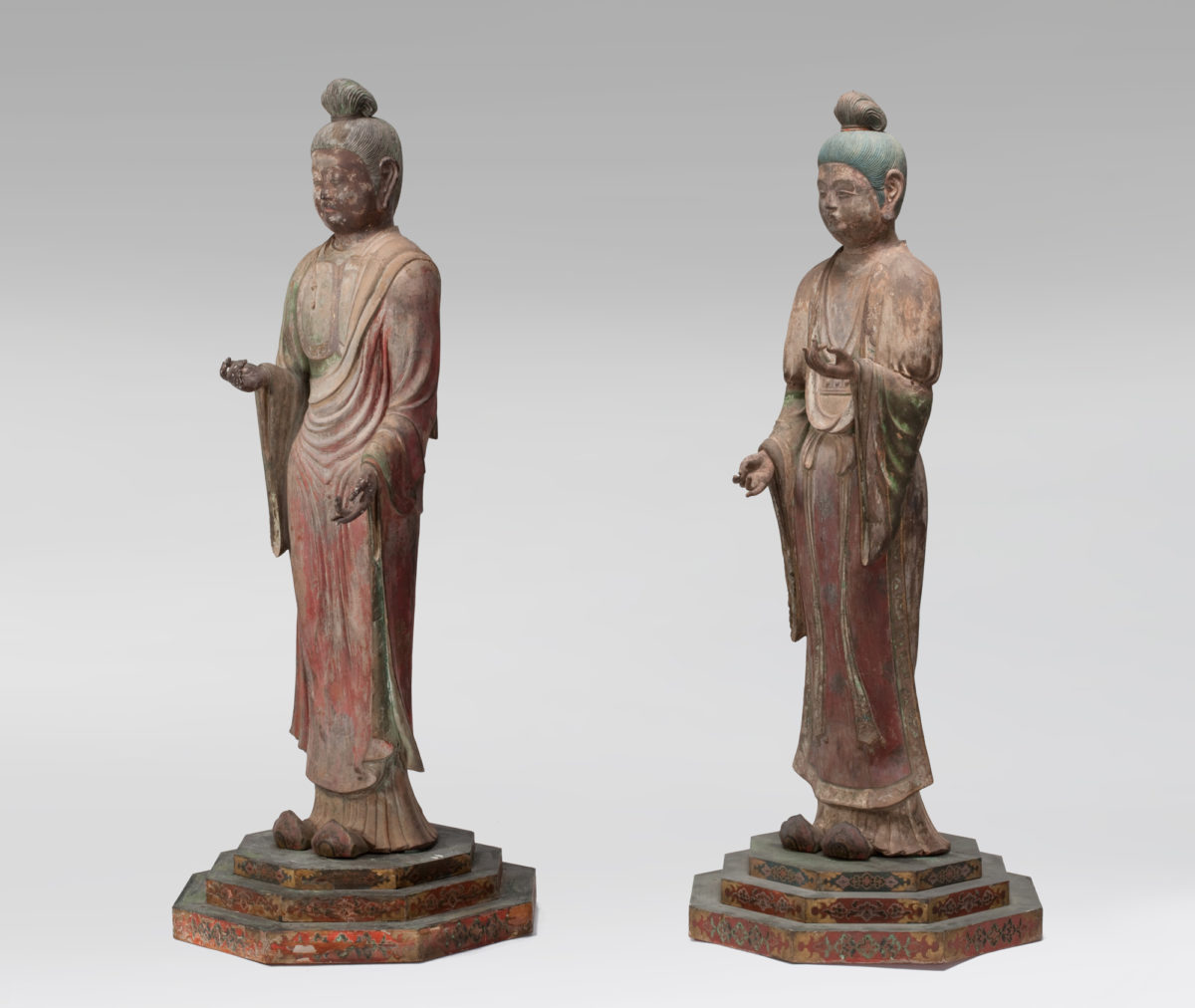
These nearly life-sized standing figures represent Brahma and Indra as young men. Their bearing is upright and focused; their slender bodies and rounded cheeks have a youthful quality. Brahma’s and Indra’s hands, now empty, probably once held symbolic attributes such as a scroll or lotus.
The close connections between court culture in Nara and in Tang dynasty China (618–907) is reflected in the costumes of these statues. Brahma’s costume, loosely modeled on the attire of high-ranking Tang dynasty officials, consists of layered robes, full sleeves, and an ankle-length apron worn over a pleated skirt.
A Tang-style armored breastplate covers Indra’s chest. In addition, he wears a monk’s robe over a long-sleeved garment with a pleated skirt. Their shoes, modern replacements, have the upturned toes characteristic of the footwear worn by Tang officials. Details of their attire may have been based on iconographic drawings or statues imported from the continent.
Very few statues of Brahma and Indra survive from eighth-century Japan; other examples include a larger dry lacquer pair at Todaiji Temple, a pair of clay statues at Horyuji Temple, and pair of wooden statues at Toshodaiji Temple.
Kofukuji Temple, which was once home to these sculptures of Brahma and Indra, was founded in 669 and moved to its present site on the eastern side of the city of Nara in 710.
From 710 until 794, Nara was Japan’s capital and Kofukuji was a bustling religious center. During this period, the temple received generous support from the Fujiwara, a prominent aristocratic clan, and other noble families. Empress Komyo (701–760), a Fujiwara by birth, funded construction of the temple’s West Golden Hall and an important set of dry lacquer sculptures, many of which survive at the temple today. Komyo was consort to Emperor Shomu (701–756), who commissioned the famous Great Buddha at Kofukuji’s neighboring temple, Todaiji. Like the Great Buddha, the statuary made for Kofukuji in the eighth century employed the most up-to-date methods and styles from China.
Though Kofukuji fell on hard times during the 18th century, when a fire ravaged the complex, and suffered during a period of anti-Buddhist sentiment in the late 1800s, it has sustained itself to the present day and continues to be an active center for Buddhist worship.
These statues of Brahma and Indra are related in style and technique to a famous group of dry lacquer sculptures made for Kofukuji Temple in the early 730s. Scholars believe that the 14 sculptures preserved today at the temple were part of a large set commissioned by Empress Komyo in 733 in memory of her deceased mother (see images of these sculptures on the temple’s website). Those statues were originally housed in the temple’s West Golden Hall, along with statues of Brahma, Indra, and a seated Buddha. Historical records indicate that images of Brahma and Indra were installed at both the West Golden Hall and the East Golden Hall at Kofukuji.
Some scholars have argued that the Asian Art Museum’s representations of Brahma and Indra, which are similar in size and proportions, once belonged to the West Golden Hall group. Other scholars point to details like the shape of the ears and the folds of Brahma’s sash as evidence that they were made somewhat later than that. Current scholarly consensus dates the Asian Art Museum statues to the mid-eighth century based on similarities to several sculptures — including a large pair of dry lacquer statues of Brahma and Indra — housed in the Lotus Hall (Hokkedo) at Todaiji Temple in Nara.
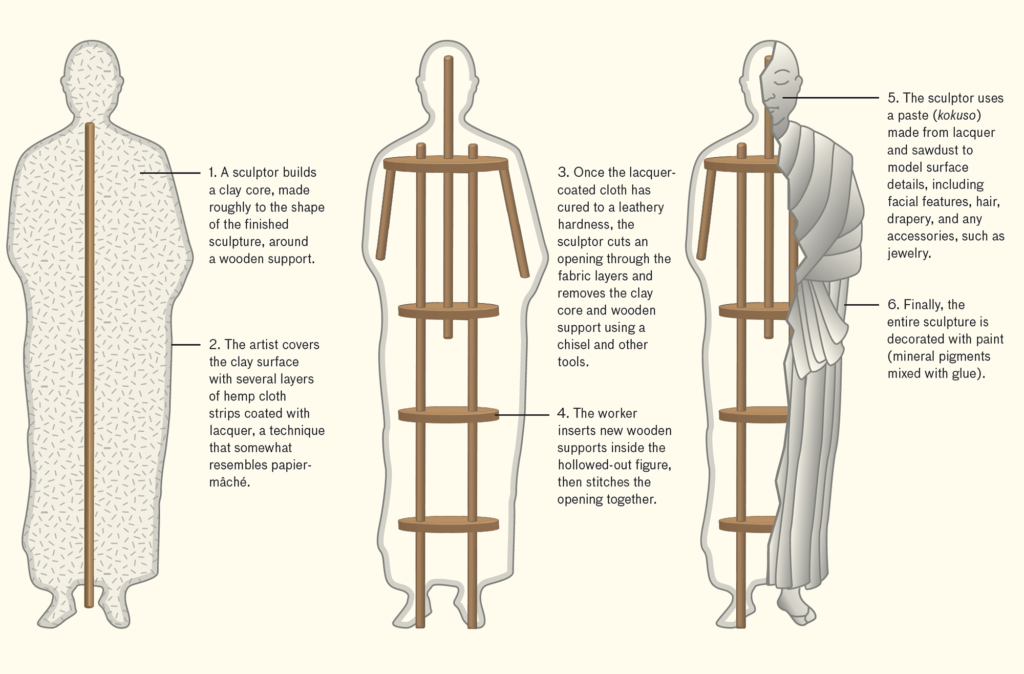
These sculptures of Brahma and Indra belong to a small group of surviving eighth-century works made using the hollow dry lacquer, or dakkatsu kanshitsu, method. Brought to Japan by artisans from the continent in the seventh century, hollow dry lacquer enabled sculptors to create lightweight icons that are pest resistant and impervious to water. Unlike large icons made of bronze or wood, hollow dry lacquer statues could easily be lifted and carried out of a temple hall during a fire — a common hazard for temples constructed of wood. Despite these advantages, the hollow dry lacquer method was abandoned in Japan within 100 years of its adoption. In all, only about 50 eighth-century hollow dry lacquer statues survive today, and very few exist outside Japan.
Making a hollow dry lacquer sculpture involves several steps (see the diagram below):
1. A sculptor builds a clay core, made roughly to the shape of the finished sculpture, around a wooden support.
2. The artist covers the clay surface with several layers of hemp cloth strips coated with lacquer, a technique that somewhat resembles papier-mâché.
3. Once the lacquer-coated cloth has cured to a leathery hardness, the sculptor cuts an opening through the fabric layers and removes the clay core and wooden support using a chisel and other tools.
4. The worker inserts new wooden supports inside the hollowed-out figure, then stitches the opening together.
5. The sculptor uses a paste (kokuso) made from lacquer and sawdust to model surface details, including facial features, hair, drapery, and any accessories, such as jewelry.
6. Finally, the entire sculpture is decorated with paint (mineral pigments mixed with glue).
The museum’s statues of Brahma and Indra are nearly 1,300 years old. There are no records to tell us what happened to them, but sometime over the centuries both images were heavily damaged. A photograph from 1906 shows us that part of Brahma’s head, Indra’s head, and both statues’ hands were missing and the edges of their sleeves and skirts were also damaged. We know from later documents that, soon after 1906, Niiro Chunosuke (1869–1954), a prominent restorer well versed in the styles and techniques of Nara-period sculpture, set to work repairing the statues.
Niiro began repairing Buddhist sculptures in 1897, when the Japanese government enacted a law to preserve Shinto shrines and Buddhist temples. He had already repaired statues at several major temples in Nara when he undertook this project. Niiro carefully restored the heads and costumes of the Brahma and Indra sculptures using lacquer-coated hemp and a fine paste of sawdust and lacquer — techniques consistent with those used to make hollow dry lacquer in the eighth century. X-rays reveal a variety of metal fasteners used during the repairs, most notably small metal clips that secured the two sides of each head at the back and large nails inserted through Brahma’s topknot and neck to attach his head to the internal wood support.
One theory holds that the statues’ heads were restored using fragments that were separated from the body, then preserved elsewhere at the temple, but this point is still open to debate. The restored statues are captured in their present state in a photo dated to 1927, indicating that the repairs had been completed by then.
These statues were offered for sale in 19096 by a prominent Nara temple, Kofukuji. Why did the temple release its treasures and how did they end up at the Asian Art Museum?
During Japan’s Meiji period (1868–1912), an upswelling of anti-Buddhist sentiment caused many temples, including Kofukuji, to part with their treasures. This brief but destructive period contributed to a rising appreciation for Japan’s ancient religious art among collectors in Japan and the West. In 1906 Kofukuji, in need of funds, sold a large group of damaged statues to the wealthy industrialist and collector Masuda Takashi (1848–1938).
At the time of the 1906 sale, these ancient statues of Brahma and Indra were in rough condition, but they were well worth preserving. Made in the eighth century, they are the oldest statues in the group and are among the few surviving Brahma and Indra images from that period. This pair was also made with the rare hollow dry lacquer method, used in Japan for only about a hundred years. A related group of hollow dry lacquer statues from Kofukuji are designated as National Treasures of Japan.
Masuda entrusted sculpture specialist Niiro Chunosuke (1869–1954) with the task of repairing the two statues. Once restored, they stayed with the Masuda family until 1964, when they were offered to the American collector Avery Brundage (1887–1975). He purchased them for the new Center of Asian Art and Culture (precursor of the Asian Art Museum), which was then under construction in Golden Gate Park.